
Commercial Kitchens
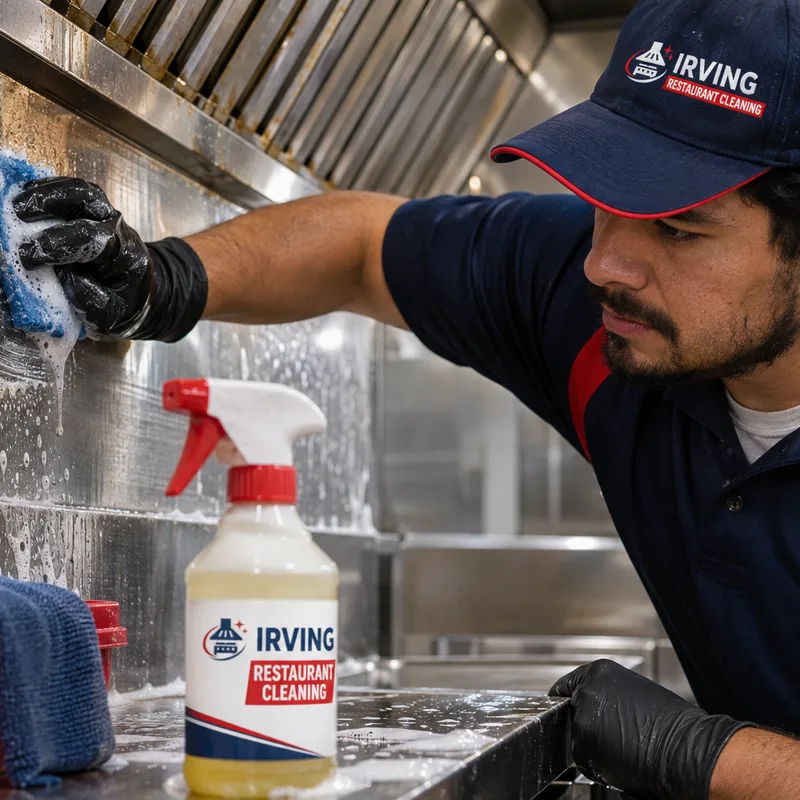
Cleaning may include accessible cooking-line surfaces, prep tables, sinks, backsplashes, equipment exteriors, floor edges, and areas beneath movable equipment. Degreasers and contact times are selected for the soil and surface.
Serving Irving, Dallas County, Texas & surrounding areas
Open 24/7
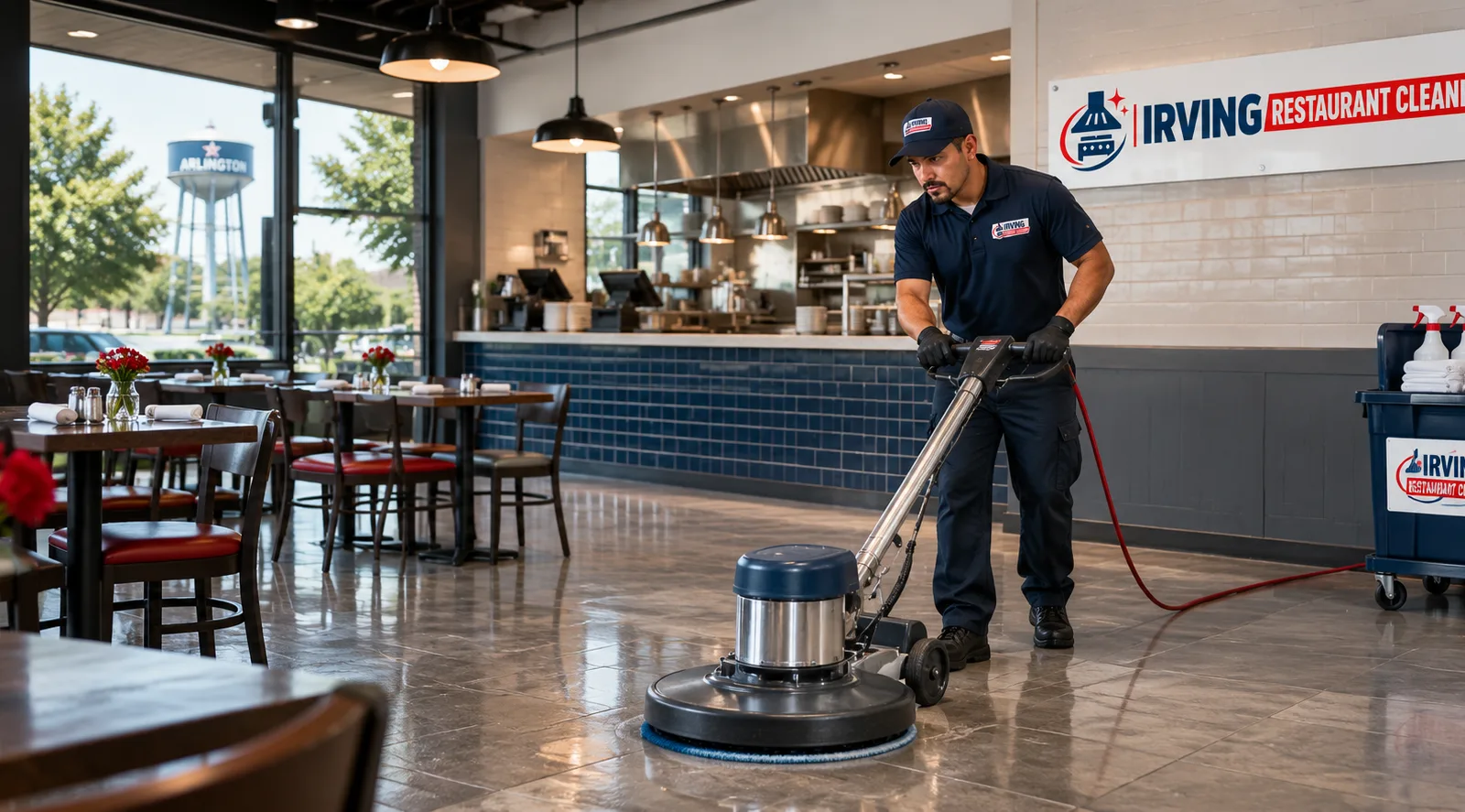
Detailed commercial cleaning for kitchens, dining rooms, restrooms, and floors, planned around your operating hours and food-service requirements.
Restaurant Cleaning Services Arlington should support the way your business actually runs. Irving Restaurant Cleaning develops practical scopes for independent restaurants, multi-unit operators, cafés, bars, and other food-service businesses. The work can cover customer-facing areas, back-of-house surfaces, restrooms, and floors without losing sight of closing routines, opening deadlines, or staff movement.
Our restaurant experts around Irving coordinate cleaning work from our base on N Rogers Road in Irving and serve restaurant operators in Arlington. Before work begins, we identify the surfaces, soil levels, access limitations, and areas that need special attention. That walkthrough turns broad expectations such as “deep clean the kitchen” into a written task list with clear frequencies.
Arlington restaurants face changing traffic tied to major event venues and entertainment districts. Businesses near AT&T Stadium, Globe Life Field, and Texas Live! may need cleaning plans that account for event-driven rushes, while restaurants near the University of Texas at Arlington may experience different peaks tied to classes and campus activity. Scheduling should match those conditions rather than force every location into the same routine.
Build the scope around the spaces your guests see and the hard-working areas your staff relies on.
Request a CallbackCleaning may include accessible cooking-line surfaces, prep tables, sinks, backsplashes, equipment exteriors, floor edges, and areas beneath movable equipment. Degreasers and contact times are selected for the soil and surface.
Tables, chairs, booths, partitions, ledges, entry glass, baseboards, and other touchpoints receive attention according to the agreed scope. Work can be timed after closing or before opening.
Vacuuming, sweeping, wet mopping, auto-scrubbing, and detail work along edges address tracked soil, food residue, and grease film. The method depends on whether the floor is tile, concrete, resilient flooring, or carpet.
Fixtures, partitions, mirrors, counters, dispensers, touchpoints, and floors can be cleaned and disinfected. Supply restocking can be included when the products and responsibilities are defined in advance.
Accessible counters, shelving exteriors, mats, splash areas, and surrounding floors can be incorporated into closing work. Staff should remove food, beverages, and loose service items before cleaning begins.
Scheduled detail work can target buildup behind movable items, wall-floor junctions, grout lines, vents, high ledges, and other areas that are difficult to complete during daily closing duties.
Restaurant soil is not uniform. Grease near a cooking line needs a different product and dwell time than mineral residue at a sink or fingerprints on entry glass. A sound cleaning plan separates tasks by surface, soil, and risk. It also avoids applying harsh products where they can damage stainless steel, sealed floors, grout, painted walls, or food-contact materials.
Food-contact surfaces require special care. Cleaning removes soil; sanitizing follows cleaning and uses an approved product at the label concentration and contact time. Disinfection is a separate process generally used for appropriate non-food-contact surfaces. Products should never be mixed, and treated surfaces must be handled according to label directions, including any required rinse.
Arlington falls under the City of Arlington’s local health authority, while the Texas Department of State Health Services publishes statewide food-establishment rules. A cleaning contractor does not replace management’s food-safety program or employee duties. The contractor’s scope should complement those controls by defining products, procedures, frequencies, and who is responsible for each task.
We review the dining room, kitchen, restrooms, storage access, flooring, entrances, and any problem areas. We also discuss operating hours, alarm or key procedures, and restrictions around equipment.
The scope identifies what is cleaned during each visit and what is handled periodically. Daily-use areas may need frequent attention, while grout detail, high dusting, or work behind movable equipment can follow a separate schedule.
Cleaning can be arranged around closing, opening, deliveries, and staff prep. Restaurants affected by Arlington event traffic can discuss schedule changes before unusually busy service periods.
Crews follow the task list, use products according to their labels, and report access problems or unusual conditions. Quality checks focus on the agreed scope rather than vague impressions.
Menus, seating layouts, traffic, and hours can change. The scope can be reviewed when new equipment, seasonal demand, or recurring buildup alters the amount or type of work required.
The right frequency depends on service volume, menu, hours, floor type, staffing, and how much cleaning employees complete during each shift. A restaurant with fryers and late-night service may need more frequent degreasing than a coffee shop with limited cooking. Carpeted dining rooms require a different maintenance cycle than quarry tile or sealed concrete.
Daily or recurring service is suited to tasks that quickly affect appearance or sanitation, including floors, restrooms, touchpoints, and accessible kitchen surfaces. Periodic deep cleaning addresses slower buildup in edges, grout, walls, high ledges, and difficult access areas. One-time cleaning may fit a reopening, management change, special event, or recovery after an unusually heavy period.
Different Arlington trade areas also create distinct scheduling needs. Downtown Arlington restaurants may coordinate cleaning with street access and evening activity. Locations around the Entertainment District can experience concentrated crowds on game and concert days. Restaurants near UTA may need work timed around student-oriented hours, while businesses near Arlington Highlands often plan around retail and dining traffic. These practical details belong in the schedule before the first visit.
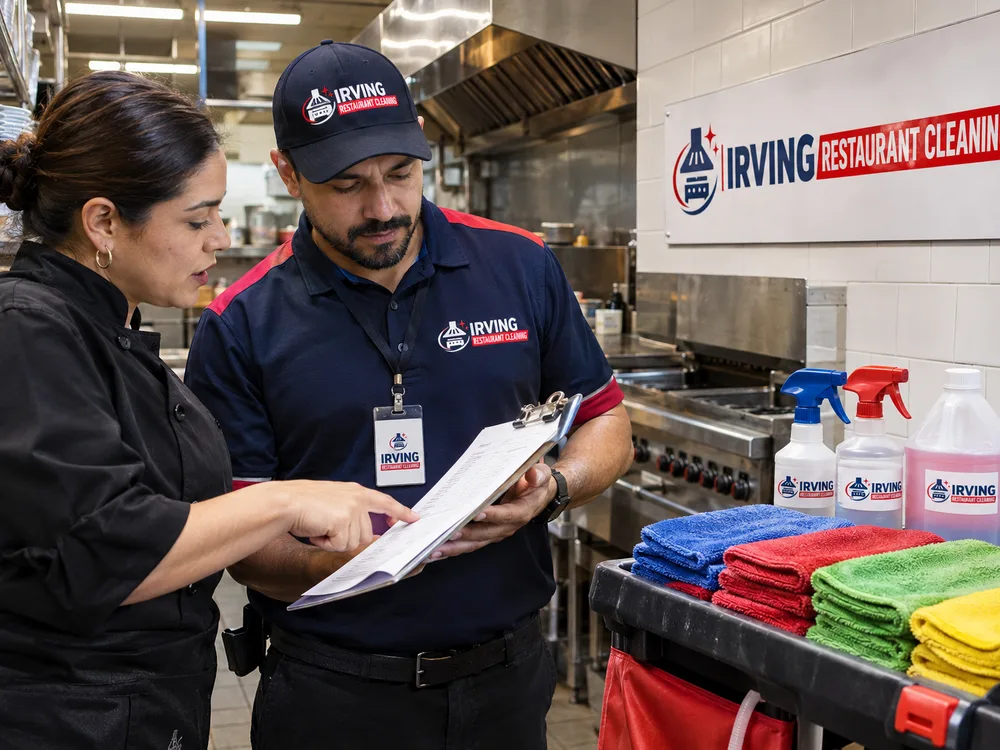
A useful proposal should name the rooms, surfaces, tasks, and visit frequency. It should also state which work is excluded. For example, general kitchen cleaning is different from servicing exhaust ducts, repairing appliances, treating pests, pumping grease interceptors, or cleaning inside energized equipment. Those jobs require the appropriate specialist and should not be implied by a broad promise of deep cleaning.
Ask how chemicals are labeled and stored, whether safety data sheets are available, and how cross-contamination is reduced between restrooms, dining areas, and kitchens. Color-coded cloths and tools can help separate work zones. Equipment should be unplugged, cooled, and made safe by authorized restaurant staff before anyone cleans behind or around it.
Access matters too. Management should identify locked rooms, alarm procedures, water access, waste handling, and the employee authorized to approve changes. A written scope gives both teams a practical reference when priorities shift or a task needs correction.
Recurring restaurant cleaning in Arlington typically costs about $250 to $900 per visit, while a detailed one-time kitchen and dining-area clean may range from $800 to $3,500 or more. Smaller cafés with light cooking usually fall toward the lower end; large kitchens with heavy grease buildup cost more.
Final pricing depends on square footage, visit frequency, soil level, floor type, equipment access, operating hours, and the exact task list. Specialty work outside general janitorial cleaning is priced separately. The exact cost is confirmed after a facility walkthrough and scope review.
Get a cleaning plan based on your restaurant’s surfaces, hours, traffic, and actual workload, with responsibilities defined before service begins.
Call for a Free QuoteYes, restaurant cleaning can often be scheduled after closing or before opening. The best time depends on staff departure, kitchen cooldown, alarm access, deliveries, and the next prep shift. Arlington locations near major sports and entertainment venues should identify event nights that may push closing work later than usual.
The right frequency is based on cooking volume, customer traffic, hours, employee closing duties, and floor type. High-use restrooms and greasy kitchen floors may need frequent service, while high dusting or grout detailing may be periodic. A walkthrough is the most reliable way to separate recurring tasks from scheduled deep cleaning.
Accessible equipment exteriors can be included when the equipment is cool, safe, and cleared by restaurant staff. Cleaning inside energized, gas-connected, or manufacturer-restricted equipment is usually excluded unless specifically reviewed. Exhaust duct service, appliance repair, and fire-suppression work require qualified specialists.
Cleaning is safest when food and clean utensils are protected or removed from the work zone. Product labels determine contact time, ventilation, and whether a potable-water rinse is required. Restaurant management remains responsible for controlling food exposure and confirming when an area can return to use.
The main cost drivers are facility size, scope, frequency, grease buildup, flooring, access beneath equipment, restroom count, and the hours available for work. A written task list makes competing quotes easier to compare because each contractor is pricing the same responsibilities.
Yes, the schedule and workload can be adjusted when traffic changes, provided the change is arranged in advance. Restaurants near AT&T Stadium, Globe Life Field, and Texas Live! may need added floor, restroom, or dining-room attention after event crowds. The revised tasks and timing should be documented before that service.
Tell Irving Restaurant Cleaning about your facility, operating hours, current problem areas, and preferred schedule. We will help define a practical scope for your Arlington restaurant.