
Kitchen Quarry Tile
Textured quarry tile and recessed grout can hold grease after routine mopping. Cleaning uses compatible chemistry, dwell time, agitation, recovery, and a thorough rinse.
Serving Irving, Dallas County, Texas & surrounding areas
Open 24/7
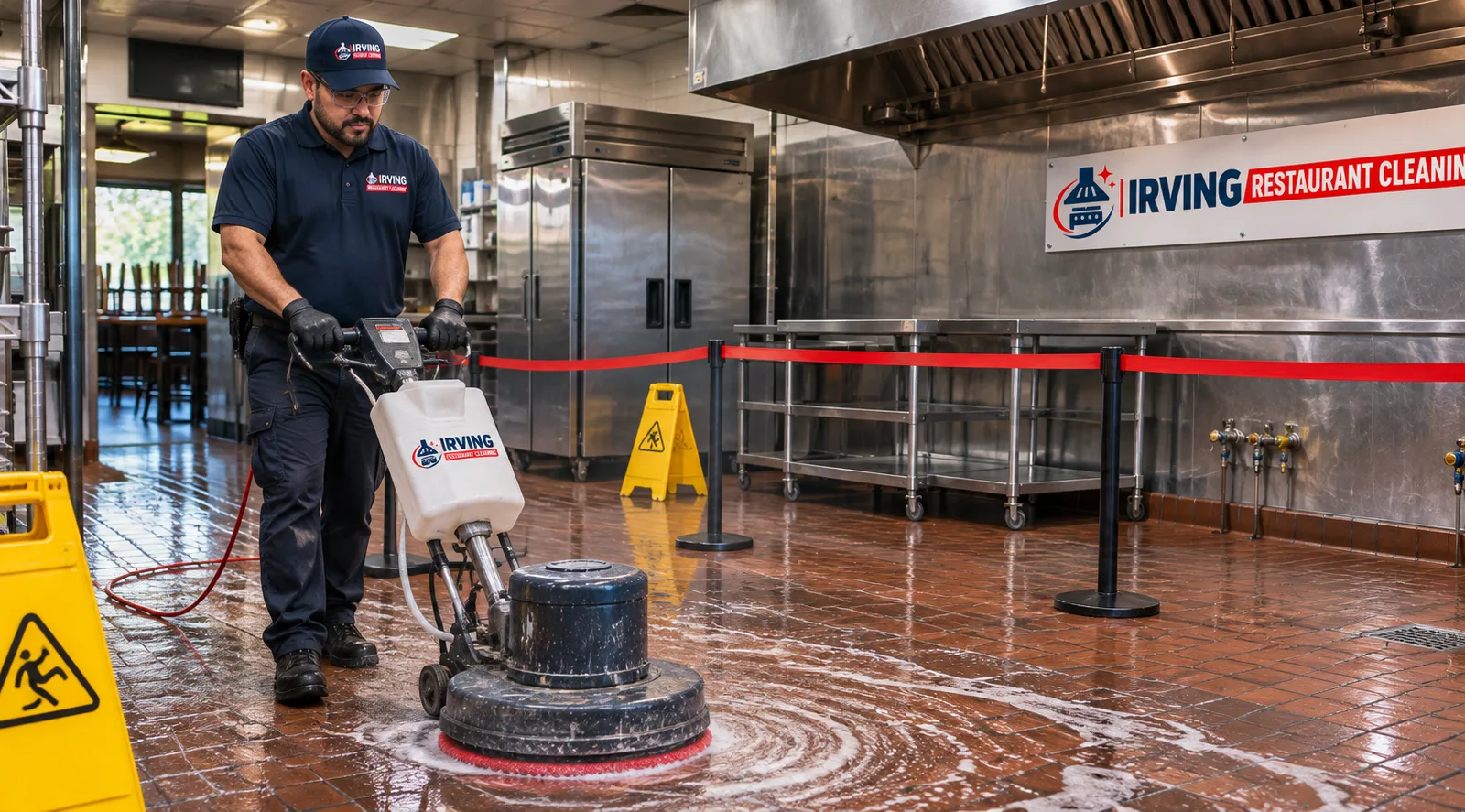
Remove greasy buildup from kitchen tile, grout, dining areas, and service corridors with a cleaning plan built around your operating hours.
Restaurant Floor Cleaning Services address the residue that ordinary mopping leaves behind. Cooking oil, tracked-in soil, food particles, and detergent film can settle into textured tile and recessed grout lines. Over time, the floor may look dull, feel tacky, or remain slippery even after the closing crew has mopped it.
Irving Restaurant Cleaning provides scheduled and project-based cleaning for commercial kitchens, dining rooms, bars, service corridors, entrances, and other hard-floor areas within food-service properties. Our restaurant specialists serving Irving plan the work around the floor material, soil load, access, and time available before staff return. The goal is a practical cleaning cycle that supports daily maintenance rather than disrupting it.
Our location on N Rogers Road places the team near central Irving and established restaurant corridors. Properties around the Irving Convention Center may need cleaning timed around event traffic, while restaurants near Las Colinas offices often have narrow gaps between lunch service and evening preparation. Along Belt Line Road and State Highway 183, frequent customer turnover can bring more grit and oily parking-lot residue through entrances. Those operating patterns affect scheduling, drying time, and which areas should receive priority.
Kitchen floor degreasing starts with the type of contamination, not with a stronger version of the same mop solution. Fresh cooking oil, polymerized grease near fryers, protein residue, and old detergent film respond differently. A technician evaluates the surface, identifies heavily loaded zones, and selects a compatible degreaser at the correct dilution.
The solution needs controlled dwell time so it can loosen oily soil before agitation. Mechanical scrubbing then works the cleaner into textured tile and low grout lines. Edges, corners, kick plates, and areas beneath movable equipment need separate attention because a floor machine cannot reach them effectively. The released slurry is recovered rather than pushed toward another part of the room, followed by rinsing until residue is removed.
Commercial kitchen floor cleaning may improve traction by removing greasy film, but cleaning cannot repair worn tile, damaged grout, poor drainage, or an unsuitable floor finish. A sensible scope distinguishes removable contamination from a physical surface defect before work begins.
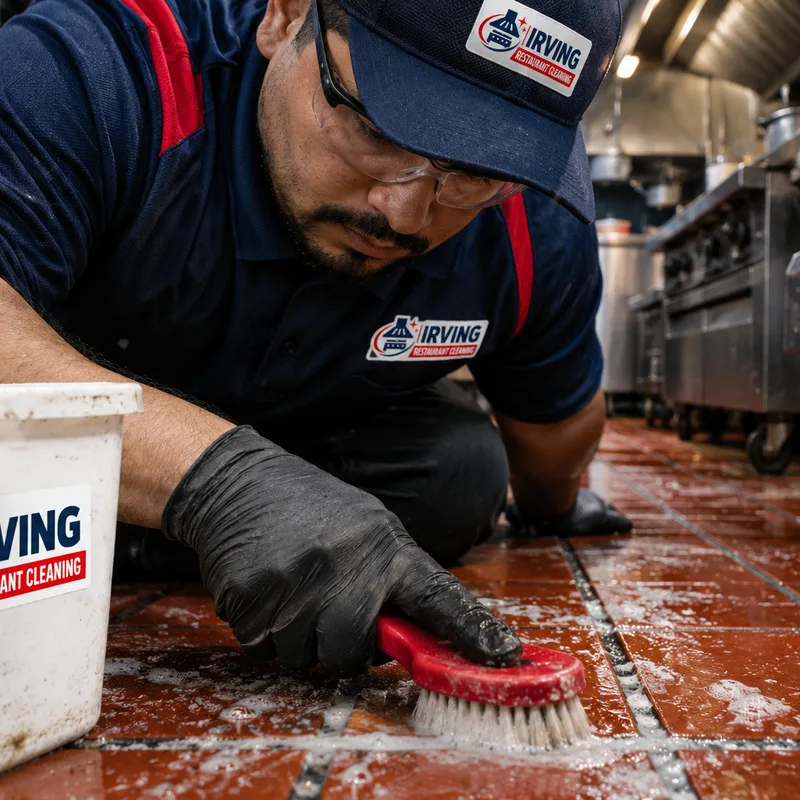
Textured quarry tile and recessed grout can hold grease after routine mopping. Cleaning uses compatible chemistry, dwell time, agitation, recovery, and a thorough rinse.
Grout lines are treated according to their condition. Darkening caused by embedded soil may respond to cleaning, while permanent staining or deteriorated grout requires a different remedy.
Tile and other hard floors in guest areas collect spills, tracked-in grit, and finish residue. The method is adjusted to the flooring and the appearance expected before opening.
Entry lanes, server stations, pickup areas, and routes between the kitchen and dining room often soil faster than surrounding floors. These traffic patterns guide the cleaning scope.
Hand detailing addresses corners, wall edges, floor transitions, and accessible spaces around movable equipment where grease tends to accumulate.
The technician identifies the flooring, drainage points, damaged areas, grease concentrations, fixed equipment, and access restrictions. A small compatibility test may be appropriate for an unfamiliar surface or coating.
Loose debris is removed, movable items are cleared as agreed, and the work zone is marked. Sensitive surfaces and nearby food-contact areas are protected before chemical application.
A floor-compatible degreaser is mixed at the selected dilution and applied evenly. It remains wet for the required dwell time without being allowed to dry on the floor.
Mechanical equipment loosens bonded soil across open areas, while hand tools address grout lines, corners, edges, and tight spaces.
The dirty solution is recovered, the floor is rinsed as needed, and remaining problem areas are treated again when appropriate. The work zone stays controlled until the floor is ready for normal use.
The right interval depends on cooking volume, menu, flooring texture, foot traffic, and daily maintenance. A high-output fry station can load nearby grout with grease faster than a dining room serving the same number of guests. Entrances facing busy parking areas may need more frequent attention because abrasive grit is carried indoors on shoes.
Daily sweeping and mopping remain part of the restaurant's routine. Periodic restaurant floor degreasing removes the film that daily work may redistribute or leave in pores and grout lines. Some properties schedule service during closed hours, while others use a planned gap after closing or before preparation starts. The usable window must include equipment setup, treatment, recovery, rinsing, and drying.
Irving's hot summers can increase dust and tracked-in residue around busy entrances, while rain can quickly add moisture and street soil. Mats, prompt spill response, clean mop water, and accurate chemical dilution help preserve the result between professional cleanings. A written scope should state which rooms are included, who moves equipment, and when the floor can return to service.
A useful quote begins with the floor area, material, current condition, and cleaning window. Explain whether the scope includes the kitchen, walk-in approaches, dish area, bar, dining room, restrooms, entrances, or service corridors. Photos can help with initial planning, but a physical review may be needed when the floor has coatings, heavy buildup, damaged grout, or difficult access.
Confirm whether appliances, shelving, tables, mats, and portable equipment must be moved. Commercial floor cleaning in Irving often takes place outside customer hours, so building access, alarm procedures, loading access, and the time of the next staff arrival should be settled in advance. If multiple tenants share a service corridor, the schedule may also need to avoid deliveries and waste collection.
Ask what chemistry and equipment are appropriate for the installed floor. Acidic products can damage cement-based grout and some stone, while excessive alkalinity or poorly rinsed detergent may leave residue. A responsible plan accounts for Safety Data Sheets, product labels, slip controls, ventilation, wastewater handling, and the restaurant's own food-safety procedures.
Describe the floor material, problem areas, operating schedule, and rooms that need attention to receive a practical cleaning scope for your restaurant.
Call for a Free QuotePricing depends on square footage, grease level, floor material, equipment access, and the available cleaning window. A relatively open dining floor usually requires less hand work than a kitchen with dense equipment, deeply recessed grout, and heavy fryer residue. Irving properties may also need after-hours access or phased work around operating schedules. The exact price should follow a review of the area and a written scope.
Cleaning can remove embedded grease and soil, but it cannot guarantee removal of permanent discoloration. Grout may remain dark because of chemical damage, pigment change, failed sealer, or deterioration rather than removable dirt. Restaurant grout cleaning should begin with inspection and, when needed, a small test area to establish a realistic result.
The work area must remain controlled until cleaning, rinsing, recovery, and drying are complete. Timing varies with floor size, ventilation, soil level, drainage, and the number of areas treated. Restaurants near Las Colinas office traffic or Irving Convention Center events should reserve a window that does not conflict with preparation, deliveries, or the next service period.
Portable items usually need to be moved if the floor beneath them is included, while fixed or utility-connected equipment generally stays in place. The agreed scope should assign responsibility for mats, rolling racks, tables, waste bins, and other movable objects. Technicians can then plan machine access and hand cleaning around remaining fixtures.
Degreasing can remove oily contamination that contributes to slipperiness, but it cannot correct damaged tile, worn texture, drainage problems, loose mats, or an unsuitable coating. The floor should be inspected after cleaning, and active spills still require immediate control under the restaurant's safety procedures.
The interval should follow the rate of buildup rather than a fixed calendar. Fryer volume, cooking methods, grout depth, traffic, entrance soil, and daily mopping practices all affect how quickly residue returns. A baseline cleaning followed by periodic visual and traction checks can establish a workable schedule for an Irving restaurant.
Tell Irving Restaurant Cleaning about the flooring, grease buildup, access, and time available. The next step is a clear scope that fits the rooms and conditions at your property.